
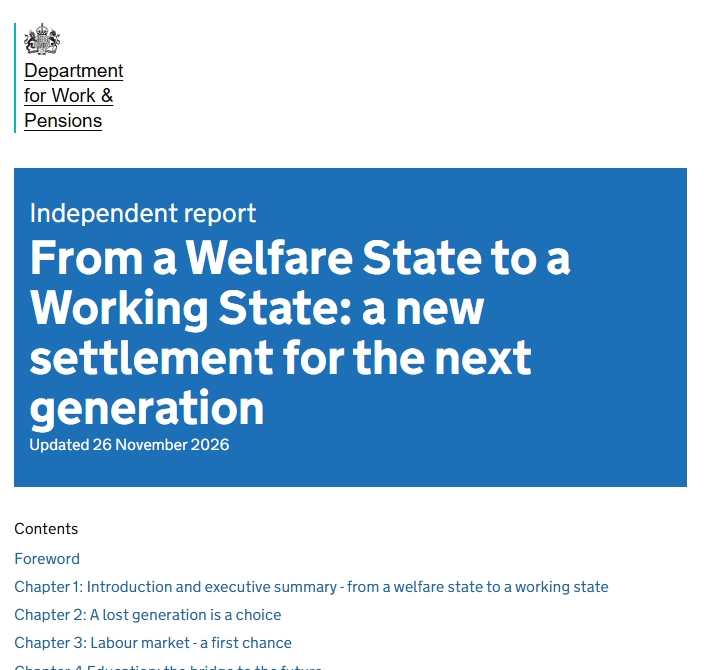
The Milburn Review is a report commissioned by the government on youth unemployment, written by Alan Milburn. It sets out a ten-year plan to get more young people into work, training or education.
We asked our research and policy teams to break down what it could look like for you. All of the ideas are recommendations – nothing is confirmed yet.
What is the Milburn Review?
The Milburn Review is a 200-page report that sets out recommendations to the government for reducing youth unemployment over the next ten years.
At its core, it wants to spend more on helping young people into work and, over time, less on benefits.
What could the Milburn Review mean for jobs, training and education?
These are some of the main ideas:
Money for employers to hire you
If you’ve been out of work or education for more than six months, the review suggests offering employers £3,000 to hire you. They’d get more if they’re a small business, or if you’re disabled.
Make it cheaper for employers to hire young people in shops, cafes and hospitality
The aim is to create more jobs for young people in these sectors.
More routes into work
Schools would have to offer work experience and vocational courses would be as valued as academic ones. There would be more college places and apprenticeships.
A Youth Opportunity Service in every area by 2029
With this, you’d get one advisor who will work with you so you can make a plan together, based on what you actually want to do.
A guaranteed paid job
If you’re still out of work after a year, the government would find you a paid job for six months.
Faster mental health support
The review proposes a new online service that would offer you advice and support straight away, without needing a diagnosis first. If you’re not working, studying or training, you could get faster access to talking therapies. There would also be national minimum waiting times for young people’s mental health care. The NHS would be judged on how well it helps young people stay in work or get a job.
If you have a long-term illness, a local health team would support you to get back to work, instead of a GP signing you off with a sick note.
What could the Milburn Review mean for benefits?
If you’re on benefits, you might have seen the news and feel confused or worried about proposed changes, especially if you’re a disabled young woman. That’s understandable. We’ve broken down exactly what the review recommends:
No Personal Independence Payment (PIP) or Universal Credit health top-up for under-25s
The review recommends ending both for under-25s and replacing them with a Youth Allowance, Additional Cost Allowance, Health and Disability Fund and Severe and Complex Needs Insurance.
A new Youth Allowance instead of Universal Credit for under-25s
It would be paid at the same rate as Universal Credit. Most people would be expected to take up support to help them into work or training in order to receive it.
Extra financial support for care leavers
Care leavers could get a higher rate of Youth Allowance, depending on their income and savings. They could also get a Care Leaver Transition Allowance of £50 a week for up to 6 months if they are not in education, employment, or training (or are at risk of dropping out).
An Additional Cost Allowance in place of PIP
You’d qualify if you have extra costs linked to your disability that are significant, established and ongoing.
A separate local Health and Disability Fund
This would be run locally and could help with costs like equipment or travel to training while you take up support to enable you to work or access training or education.
Severe and Complex Needs Insurance
This would be for young people who are unlikely to ever be able to work, with more financial support than what’s currently offered. Entitlement decisions will be based on clinical, educational and other evidence already available, rather than a lengthy assessment process.
What is still unclear in the Milburn Review?
A lot is still unclear. Some people could end up receiving less, but it’s unclear who, and how many people it would affect.
PIP and health top-ups can be a safety net so losing them could make life a lot harder and affect your health. We understand why this feels uncertain and worrying. If you’re feeling worried about your financial situation, there are lots of organisations that can help.
What does the Milburn Review say about why it’s so hard for young people right now?
The review confirmed something we already knew: young people haven’t failed, the system has failed you.
It also recognises that you face different challenges, including disability, mental health, housing, caring responsibilities and confidence.
We think the intention behind it is a good one: giving young people a better chance. At the same time, we understand why some of the detail is concerning.
What happens next?
Nothing is confirmed. The government hasn’t said which recommendations it will take forward, so watch this space. Join our mailing list and follow us on social media. We’ll keep you updated.
FAQs
Has the government agreed to the Milburn Review’s recommendations?
No. They are recommendations. The government hasn’t yet said which it will go ahead with.
What is the Youth Opportunity Service?
A service the review suggests setting up in every area by 2029. You’d get one advisor and make a plan together based on what you want to do.
Would PIP stop for under-25s?
The review recommends that under-25s would no longer claim PIP. It would be replaced by an Additional Cost Allowance. This isn’t confirmed.
What is the Youth Allowance?
A new benefit the review recommends for under-25s, instead of Universal Credit. It would be paid at the same rate, but most people would be expected to take up support with work or training.